Blog
How to Automate Your Compliance Obligations Tracking
Manual compliance tracking creates gaps, missed deadlines, and audit risk. Discover how automation transforms compliance obligations management, with alerts, reporting, and real-time visibility built into one platform.
Read More: How to Automate Your Compliance Obligations TrackingThe Cost of Non-Compliance: Why You Need a Compliance Register
Non-compliance is expensive, and Australian regulators are increasingly willing to pursue penalties, enforceable undertakings, and prosecutions. Discover the real cost of non-compliance and how a compliance register protects your business.
Read More: The Cost of Non-Compliance: Why You Need a Compliance RegisterUnderstanding OHS and WHS Legislation in Australia: A Compliance Guide
A comprehensive guide to Australia’s OHS and WHS legislative framework, covering the Model WHS Act, state-specific laws, employer obligations, and how compliance management software helps you stay ahead.
Read More: Understanding OHS and WHS Legislation in Australia: A Compliance GuideHow to Build a Compliance Register: A Step-by-Step Guide for Australian Businesses
Learn how to build a compliance register step by step. Covers the 10 key fields, 4 obligation categories, ownership, review cycles, and compliance management software for Australian businesses.
Read More: How to Build a Compliance Register: A Step-by-Step Guide for Australian BusinessesNavigating Compliance Obligations: A Complete Framework for Australian Organisations
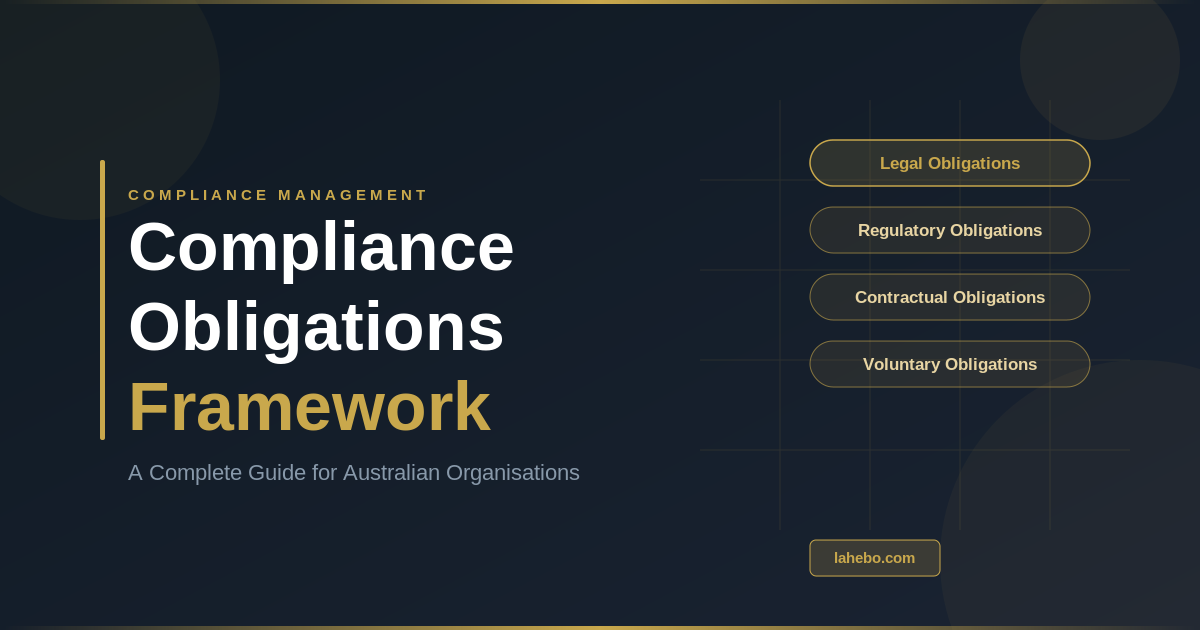
Learn what compliance obligations are, how to identify and track them, and build a robust compliance framework for your Australian organisation.
Read More: Navigating Compliance Obligations: A Complete Framework for Australian OrganisationsWHS Risk Register: Ensuring Workplace Safety Compliance in Australia
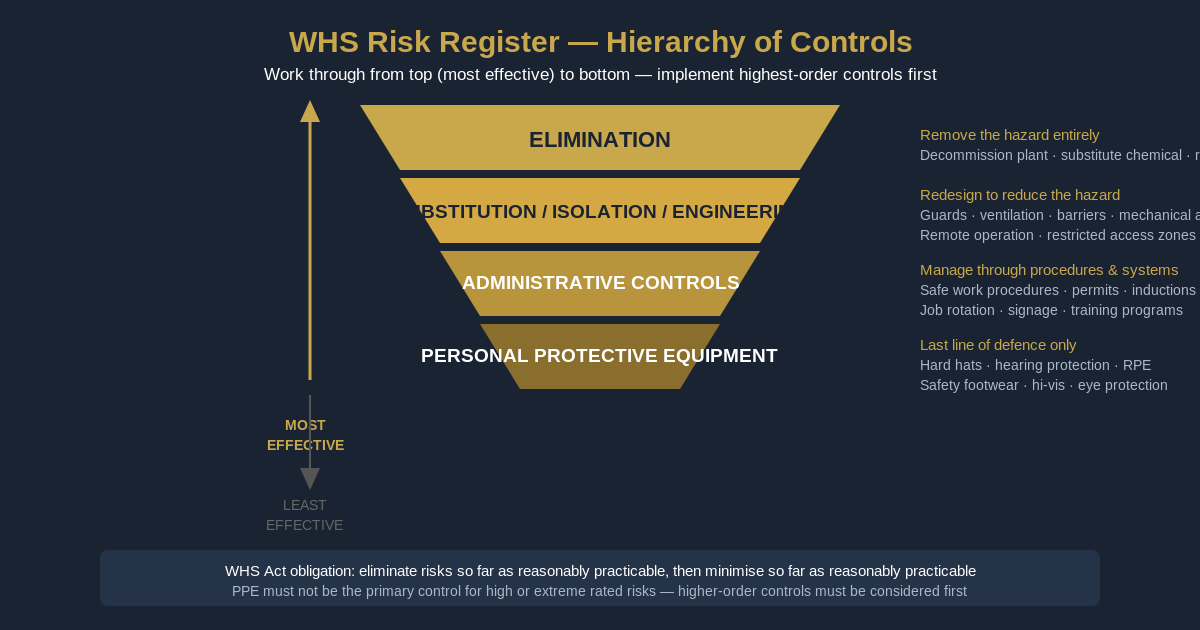
A WHS risk register is the primary tool for meeting your workplace health and safety duty in a structured, documented way. This guide covers hazard identification, risk assessment, the hierarchy of controls, documentation requirements, and state-by-state WHS legislation variations.
Read More: WHS Risk Register: Ensuring Workplace Safety Compliance in AustraliaHow Often Should You Review and Update Your Risk Register?
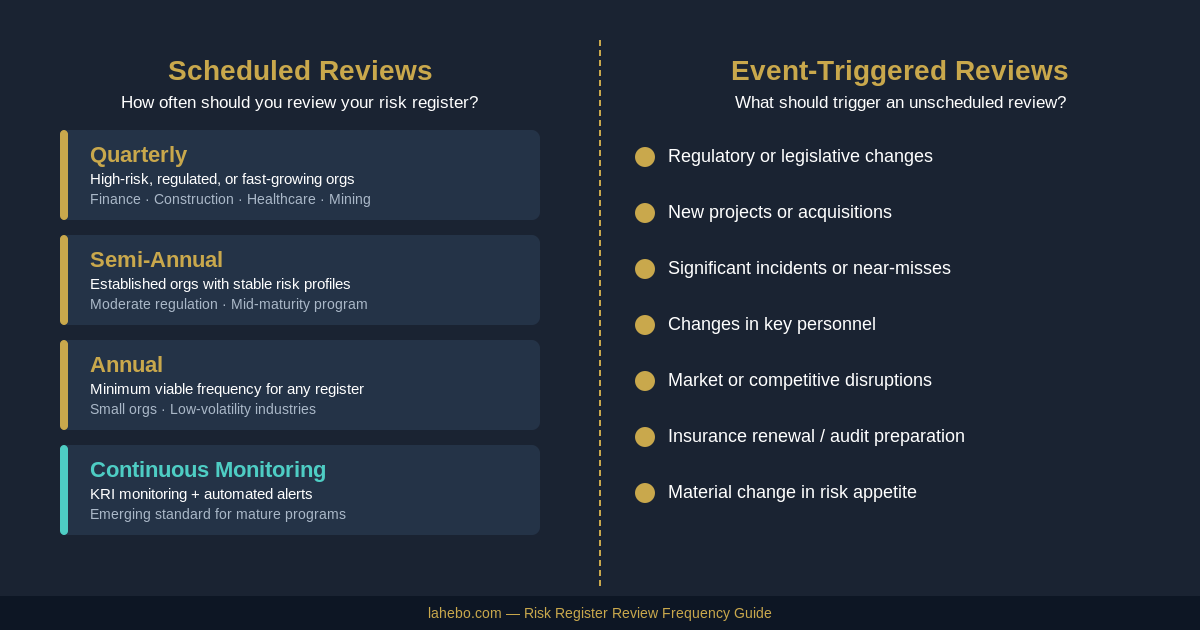
Most organisations don’t have a consistent approach to reviewing their risk register, which means it drifts out of sync with reality. This guide covers review frequency, event triggers, ownership, and a sample review schedule.
Read More: How Often Should You Review and Update Your Risk Register?Integrating Your Risk Register with Incident Management
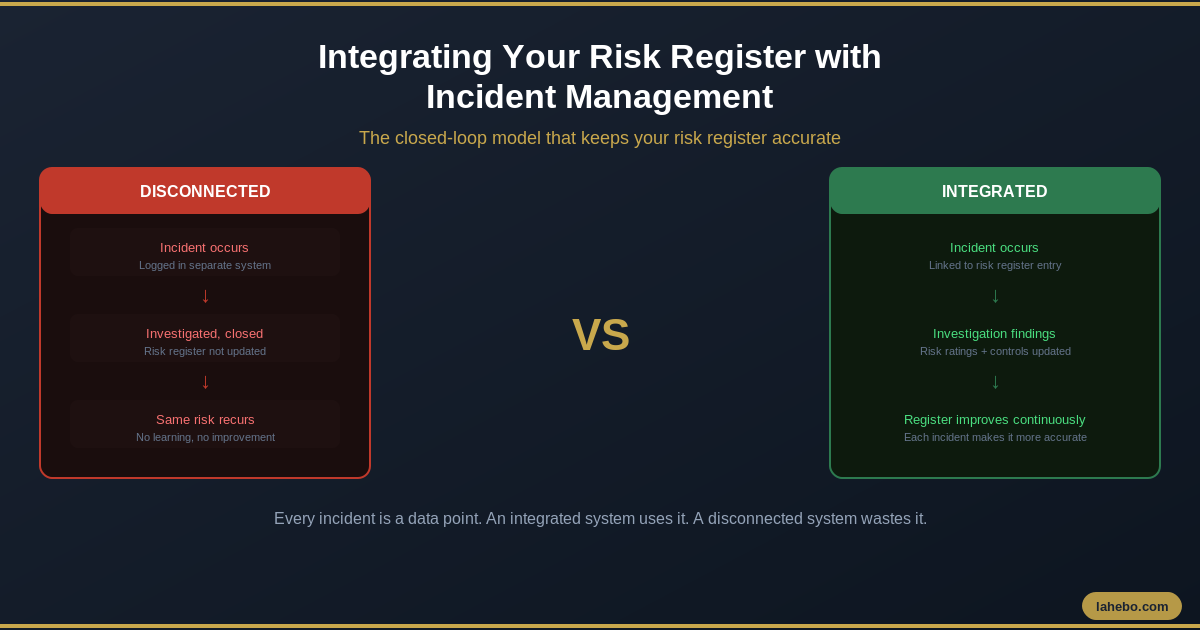
Most organisations treat risk and incident management as separate processes. This guide explains how to integrate them with a closed-loop model so every incident improves your risk register automatically.
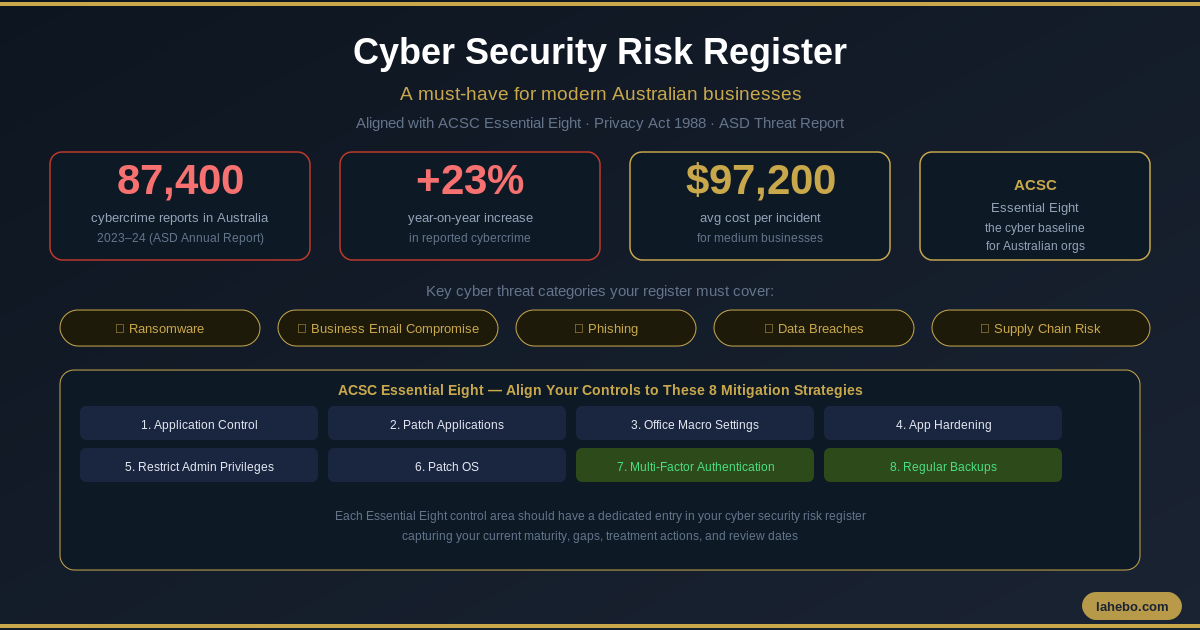
Read More: Integrating Your Risk Register with Incident ManagementCyber Security Risk Register: A Must-Have for Modern Australian Businesses
Build a cyber security risk register aligned with the ACSC Essential Eight. Cover ransomware, phishing, BEC, data breaches and supply chain risk with practical guidance for Australian businesses.
Read More: Cyber Security Risk Register: A Must-Have for Modern Australian Businesses